

Life is a complete roller coaster during the breastfeeding phase — sleepless nights, hormonal changes, constant fatigue, and intense skin mood swings all happen together. During this time, many new moms struggle with acne breakouts, worsening pigmentation, and extreme dryness that doesn’t improve even after using a basic moisturiser. This is exactly why following a breastfeeding safe skincare routine becomes so important, as it helps support your skin barrier, balance sensitivity, and care for your skin gently without risking your baby’s safety.
According to dermatology experts, following skincare safety during breastfeeding guidelines ensures your routine nourishes your skin without exposing your baby to harmful chemicals.
And the most perplexing of all?
“How can I design a skincare regimen that is safe for nursing?”
“Which ingredients are safe and which are not?”
“Should I stop using retinol, acids, and acne gels altogether?”
Without a doubt, you’re not alone. This uncertainty affects all new mothers.
The good news is that using skincare products while nursing is completely safe as long as you use the proper ingredients. In this post, I offer a comprehensive skincare regimen that is human-friendly, dermatologist-backed, and safe for nursing mothers.
During the breastfeeding phase, skin does not need complicated or aggressive treatments. What matters most is consistency and gentle care. By following a simple and balanced daily skincare routine for glowing skin, new moms can maintain healthy, hydrated, and naturally radiant skin without using unsafe or harsh ingredients.
The Significance of a Safe Skincare Routine for Breastfeeding
Your skin experiences a roller coaster period while you are nursing. Hormonal fluctuations can cause melasma, deepening pigmentation, acne outbreaks, and occasionally dry skin that is obviously lifeless. In addition, sleep deprivation frequently results in redness and under-eye circles.
Maintaining a breastfeeding-safe skincare regimen becomes crucial during this busy time because the skin absorbs a tiny amount of whatever product you use. Selecting safe and gentle skincare products is crucial for both you and your baby because some substances are not suitable for breast milk. You may have peace of mind and healthy, radiant skin with a well-thought-out, breastfeeding-friendly skincare regimen.
Your skin is erratic because of a hormonal imbalance.
- Breakouts of acne
- Pigmentation and melasma
- Dullness plus dryness
- Circles beneath the eyes
- Redness after giving birth
Because of this, skincare is crucial when nursing. Two. Breast milk may be impacted by certain skincare substances. Your body may absorb anything you put on your skin. Thus, it’s critical that nursing moms adhere to a safe skincare regimen.
What Is a Safe Skincare Routine for Breastfeeding?
Using skincare products that nurture your skin without endangering your infant is the true essence of a breastfeeding safe skincare routine. During the breastfeeding phase, it becomes crucial to choose gentle, fragrance-free, and baby-safe formulas, as certain potent ingredients can be absorbed through the skin and enter the body. This approach helps protect your baby from harmful substances while still maintaining healthy, balanced, and well-nourished skin.
The Skin Absorption Concept
A tiny portion of a cream, serum, or lotion gets absorbed by the skin’s layers after application. Some active compounds, such retinoids, strong lightening agents, and high-strength acids, can be absorbed more deeply than others, although not all substances enter the bloodstream. In order to prevent any indirect effects on the infant, we prefer products that are safe to absorb when breastfeeding.
Is it safe to use skincare products while nursing?
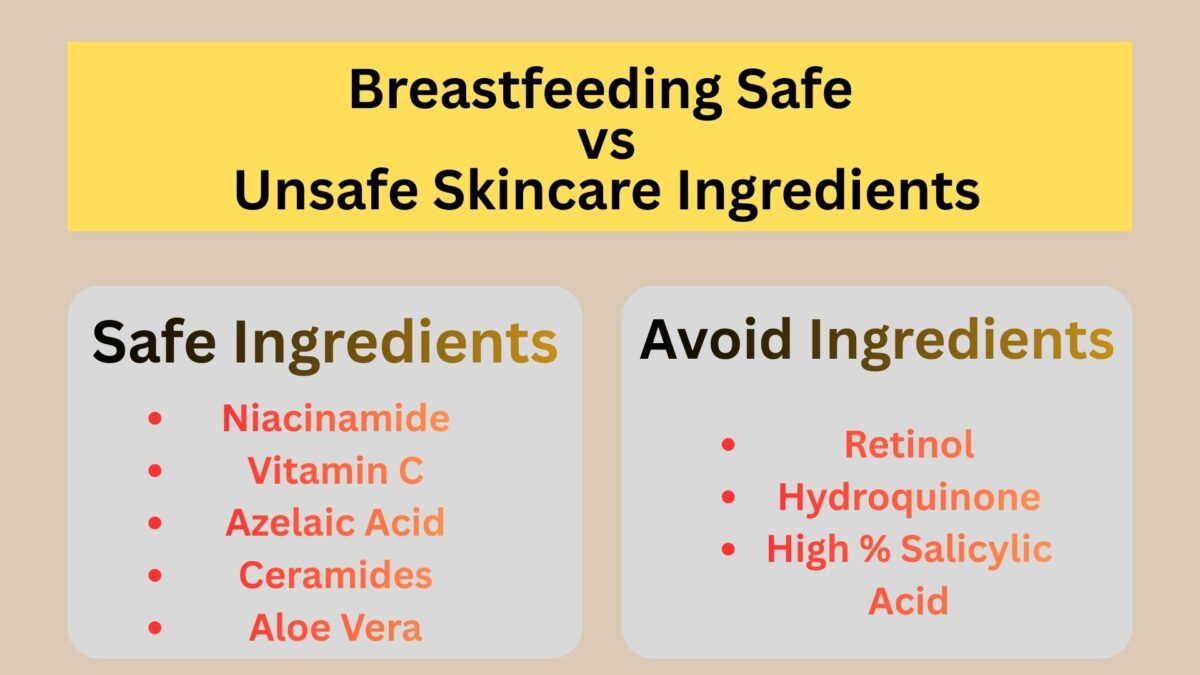
As long as you use the proper ingredients, skincare products are safe to use while nursing. Breastfeeding is safe for the majority of cleansers, moisturisers, sunscreens, hyaluronic acid, niacinamide, vitamin C, aloe vera, and ceramides. Mothers who inadvertently utilise potent active substances like hydroquinone, retinol, or high-percentage chemical peels are at risk. As a result, throughout this stage, ingredient awareness is crucial.
Typical Skin Problems in New Mothers
New mothers often experience the following skin issues during the breastfeeding and postpartum period:
- Acne breakouts: An imbalance in hormones causes an increase in whiteheads and pimples.
- Melasma and pigmentation: Following pregnancy, pigmentation intensifies, particularly when exposed to sunlight.
- Dryness and dullness: The skin may seem taut, dry, and lifeless since the body shares nutrients.
- Redness and sensitivity: Certain products quickly irritate the skin, causing it to become reactive. Under-eye circles: Hormonal changes, stress, and sleep deprivation can all exacerbate dark circles.
Without endangering your baby’s safety, a safe skincare regimen gently manages these problems.
Things You Shouldn’t Eat While Nursing
Certain skincare products may be absorbed via the skin during nursing and have an impact on breast milk. As a result, it’s critical to stay away from these active chemicals while adhering to a safe regimen. The top 5 components that nursing moms should absolutely stay away from are listed below, along with an explanation for each:
1. Vitamin A derivatives, retinoids, and retinol
Because it can readily penetrate deeper skin layers and enter the bloodstream, retinol is regarded as one of the most dangerous substances to take while nursing. For this reason, dermatologists strongly recommend avoiding it throughout the breastfeeding period, just as they do during pregnancy.
Why stay away from:
- Extremely skin-absorbing
- may have an indirect impact on breast milk
- limited during pregnancy and lactation in order to treat pigmentation and melasma
2. Strong Salicylic Acid (BHA)
High-strength BHA is not safe to use while nursing, however salicylic acid is a very effective chemical for acne. Strong formulas can be harmful to the skin and breast milk, although low doses might be acceptable.
Why stay away from:
- Steer clear of BHA concentrations greater than 2%.
- Stronger BHA is more easily absorbed.
- Spot treatments are only safe when used sparingly.
3. Hydroquinone
Although hydroquinone is a potent pigmentation-lightening agent, nursing mothers should not use it. Doctors suggest rigorously avoiding this substance because it is more easily absorbed than other active ingredients.
Why stay away from:
- used to cure pigmentation
- High risk of absorption when nursing
- Additionally, doctors advise against postpartum use.
4. High Dose Benzoyl Peroxide
Although benzoyl peroxide is an effective acne therapy, it is not safe to take a high dose while nursing. Although low quantities (2.5%) are occasionally seen as appropriate, there is still a chance of absorption and discomfort. Why stay away from them:
- Breastfeeding at high doses is not safe.
- Although somewhat safer, a moderate dose of 2.5% is still not recommended.
- can exacerbate dryness and skin irritation.
5. Powerful Chemical Peels (High AHA/BHA%)
Breastfeeding already makes the skin sensitive. Glycollic, lactic, or BHA peels are examples of strong chemical peels that damage the skin’s barrier and increase the risk of absorption.
Why stay away from them:
- Medical and at-home peels are both dangerous.
- Peels with high percent glycollic, lactic, or salicylic acid should not be used while nursing.
- They weaken the skin’s protective layer, which increases redness and irritation.
Safe Components for Nursing Mothers
You must use safe substances to protect, nourish, and repair your skin during nursing, and this is where a breastfeeding safe skincare routine plays a vital role. The good news is that there are many safe, gentle, and 100% breastfeeding-friendly products that can effectively address common postpartum skin concerns like acne, pigmentation, dryness, and dullness. Below is a list of the best safe ingredients that you can use completely worry-free during this phase.
Vitamin B3, or niacinamide
The multipurpose element niacinamide is totally safe for nursing mothers. It offers gentle and efficient solutions for all skin issues, including pigmentation, acne, and enlarged pores.
Advantages
- manages acne
- reduces the intensity of pigmentation
- lessens inflammation and redness
- noticeably constricts pores
Hyaluronic Acid
Deep hydration is provided by the mild component hyaluronic acid, which is completely safe to use during nursing. It is totally safe to use on a daily basis because it is not absorbed into the bloodstream.
Benefits
- gives you pure hydration.
- makes skin smooth and plump.
- Softens delicate lines temporarily
Vitamin C (MAP, SAP, or ascorbic acid)
Vitamin C is a pigment-fading and glow-enhancing substance that is safe for nursing moms. For those with sensitive skin, the SAP and MAP variants are ideal.
Advantages
- provides a natural glow to the skin.
- lightens dark patches and pigmentation
- promotes the synthesis of collagen
Ceramides
Because they rapidly relieve dryness and rebuild the skin barrier, ceramides are a lifesaver for postpartum skin. When nursing, they are an essential component.
Benefits
- Robust barrier restoration
- reduces inflammation, redness, and dryness
- maintains skin’s smoothness, softness, and protection.
Aloe Vera
All-natural, mild, and appropriate for nursing women, aloe vera is a calming and restorative substance. For delicate postpartum skin, it’s the perfect option.
Advantages
- reduces inflammation and redness
- Hydrates and healing
- calms skin prone to acne
10 to 15% Azelaic Acid
Azelaic acid is the best active ingredient that is suitable for nursing if you have issues with pigmentation, acne, and postpartum melasma. It is safe, efficient, and authorised by a physician.
Advantages
- lessens acne
- Diminished pigmentation
- A little improvement in melasma
Mild AHA, or lactic acid
A mild exfoliant, lactic acid leaves postpartum skin smooth and radiant. While nursing, mild amounts are safe.
Benefits
- Mild exfoliation
- soothes parched skin
- amplifies the natural glow
You may simply maintain a glow-enhancing, acne-controlling, and pigmentation-reducing skincare routine while nursing; all you need to do is select the appropriate products. Niacinamide, hyaluronic acid, vitamin C, ceramides, aloe vera, azelaic acid, and mild lactic acid are safe choices that maintain healthy, glowing skin without endangering your unborn child.
Breastfeeding Safe Morning Routine
This 10-minute practice is easy, efficient, and specifically created for nursing parents. During the postpartum phase, skin is delicate, so it’s important to use only safe and gentle cosmetics.
Step 1: Wash your face gently
While it’s important to wash your skin in the morning, avoid using harsh cleansers while nursing. The skin barrier is shielded and the chance of irritation is reduced with a mild, fragrance-free face wash.
Select a cleaner that is:
- Fragrance-free: To shield delicate postpartum skin from burning or redness.
- Sulfate-free: This preserves the skin’s natural hydration without stripping it.
Soft washing without dryness or tightness is provided by the gentle gel/cream composition.
Top Ingredients:
- Aloe: Reduces redness and instantly relaxes the skin.
- Ceramides: Prevent dryness by fortifying the skin’s barrier.
- Niacinamide: Offers gentle relaxing, oil control, and light washing.
Step 2: Serum of Vitamin C
Vitamin C helps manage postpartum pigmentation and is completely safe for nursing mothers. This progressively improves uneven skin tone and increases shine.
Advantages
- Pigmentation control: Reduces dark patches, melasma, and sun spots.
- Brightening effect: Skin seems healthy, radiant, and new.
- Even skin tone: Lessens discolouration and dullness during childbirth.
Step 3: Niacinamide Serum (Optional but Fantastic)
Because niacinamide regulates, strengthens, and calms the skin, it’s a mom-friendly substance. This step is ideal if you have pores, redness, or acne.
Components:
- Aloe: Immediately calms the skin and lessens redness.
- Ceramides: Strengthen the skin’s barrier to prevent dryness.
- Niacinamide: Provides light washing, oil management, and mild relaxation.
Step 4: Moisturiser
Hydration of the skin is especially crucial when nursing. Particularly if you’ve used actives (such vitamin C or niacinamide), an excellent moisturiser maintains your skin soft, smooth, and protected.
Select components such as:
- Ceramides: Restore the skin’s protective layer and offer sustained hydration.
- Deep moisture is locked in by hyaluronic acid, giving skin a lush appearance.
- The best water-binding component for regular hydration is glycerin.
Step 5: Sunscreen (VERY IMPORTANT)
Melasma, uneven skin tone, and pigmentation can all easily get worse during nursing. The one step that protects your skin and doubles the effectiveness of all your serums is sunscreen.
Select a sunscreen with:
- SPF 50: Effective sun protection for everyday use.
- PA++++: The highest level of UV-A protection (essential for controlling melasma).
- Avoid oxybenzone if you have sensitive postpartum skin.
The largest cause of postpartum pigmentation is not wearing sunscreen, therefore never skip this step!
Safe Nighttime Skincare Routine for Breastfeeding
Nighttime is best for postpartum skin repair and rejuvenation, which is why a breastfeeding safe skincare routine at night should always be gentle, effective, and barrier-focused. Since nursing can leave your skin feeling tired, dull, or irritated, following the right steps in the evening helps your skin recover and strengthen itself naturally. Despite its simplicity, this approach delivers noticeable and long-lasting results.
step 1. use a cleanser (face wash).
You should always wash your face at night. Breakouts can result from the accumulation of dust, pollutants, perspiration, sunscreen, and extra oil on your skin throughout the day. All of this may be eliminated without making your skin feel tight or dry by using a mild cleanser.
Why it’s crucial to clean at night
- Eliminates midday dirt: Dust and pollution can erode the skin’s protective layer and give the appearance of dull skin.
- Prevents acne: Rinsing away perspiration and oil lessens outbreaks and clogged pores.
- Enhances product absorption: On clean skin, skincare products function more effectively and go deeper.
Double cleansing is strongly advised if you use makeup; use a cleansing balm or makeup remover first, then wash your face. This guarantees that your skin is completely cleansed and prepared for the subsequent skincare procedures.
Step 2: 10 to 15% azelaic acid
Azelaic acid is regarded as a stellar element for nursing mothers because it is soothing, safe, and has many advantages. It addresses pigmentation and acne without causing skin irritation.
Why Azelaic Acid Is the Best:
- Lightens pigmentation: Removes blemishes, uneven tone, and postpartum dark spots.
- Melasma-friendly: The greatest substitute for retinol that is both safe and effective for melasma.
- Reds redness: Reduces inflammation and soothes delicate postpartum skin.
It’s ideal for your nighttime routine because it’s mild enough for everyday use.
Step 3: Moisturiser with an emphasis on barrier repair
The best time to use a rich, nourishing moisturiser is at night, when the skin heals itself. These components improve dullness, seal in moisture, and fortify the skin barrier.
Select a moisturiser that contains:
- Squalane: A thin oil that provides intense moisture without blocking pores.
- Ceramides: Prevents dryness and restores a damaged skin barrier. Hyaluronic Acid: Provides plumpness and bounce by retaining water in the skin.
- Peptides: Rejuvenate worn-out postpartum skin; enhance skin firmness and healing.
Using a slightly heavier moisturiser at night keeps the skin hydrated and gives it a more youthful appearance in the morning.
Safe Breastfeeding Skincare Routine for Various Skin Conditions
Breastfeeding frequently causes skin problems, particularly melasma, dryness, pigmentation, and acne, making skincare feel confusing and unpredictable due to constant hormonal changes. This is why following a breastfeeding safe skincare routine becomes essential, as it focuses on using gentle, baby-safe ingredients to manage each concern effectively. Below, a breastfeeding-safe regimen for every common skin issue is explained in detail to help you care for your skin with confidence.
1. Safe Treatments for Acne During Breastfeeding
Acne or outbreaks are typical because postpartum hormones are unpredictable. The good news is that nursing moms can use a variety of safe and moderate acne-treating substances. These risk-free treat acne and relax the skin.
Hormonal changes during breastfeeding can trigger acne and clogged pores. Instead of using harsh cleansers, it is better to opt for a gentle best face wash for acne and pimples that cleanses excess oil without stripping the skin or causing irritation, making it suitable for sensitive postpartum skin.
Safe Methods for Treating Acne While Nursing:
These components manage acne without endangering the unborn child:
- Niacinamide: Reduces redness, balances oil, and gradually manages acne. Ideal for delicate postpartum skin.
- The safest active component for nursing is azelaic acid. targets acne scars, congested pores, and pimples without causing inflammation.
- Mild lactic acid: Keeps pores clean by gently exfoliating them. An excellent mild AHA for skin that is dry and prone to acne.
- Tea Tree (Very Mild): May be applied topically. Acne is soothed by its antibacterial qualities.
Avoid using these potent active substances at all costs during nursing
- Retinol: Deeply absorbs and is regarded as totally hazardous while nursing.
- High Salicylic Acid: Steer clear of BHA in excess of 2%. Exfoliating vigorously is not safe for nursing.
- Benzoyl Peroxide (Better to Avoid): Although low dosages are occasionally thought to be acceptable, postpartum sensitivity and absorption hazards make it advisable to stay away from it.
2. Treatment for Pigmentation and Melasma During Breastfeeding
During pregnancy and breastfeeding, hormonal changes often cause pigmentation and melasma to deepen. While treating these concerns, it’s important to follow a breastfeeding safe skincare routine that focuses on gentle, low-risk ingredients rather than harsh treatments. The goal is gradual brightening while keeping both mom and baby safe.
Ingredients that are safe for breastfeeding
- Regular usage of vitamin C can help remove dark spots and add a natural shine.
- Niacinamide improves uneven skin tone and fortifies the skin barrier.
- One of the greatest choices for a safe skincare regimen for melasma while nursing is azelaic acid.
- Low levels of lactic acid gently exfoliates dull skin without causing irritation.
- Sensitive skin is naturally brightened and calmed by liquorice root extract.
- Very mild versions of kojic acid can be utilised for safe, gradual brightening in low-strength recipes.
Avoid these ingredients
- Because of its high rate of absorption, hydroquinone is not advised in a skincare regimen that is safe for nursing mothers.
- When nursing, retinol is a powerful substance that should be avoided at all costs.
- Pigmentation and melasma can progressively improve without endangering your infant if you adhere to a breastfeeding-safe skincare regimen and wear sunscreen every day.
3. Dry skin and dullness upon childbirth
After giving birth, hormonal fluctuations, lack of sleep, and changes in the body’s nutrient levels frequently cause skin to appear dry and lifeless. A breastfeeding-safe skincare regimen that profoundly nourishes the skin and restores the moisture barrier is crucial at this stage.
Dryness and rough texture are very common after childbirth, especially while breastfeeding. At this stage, hydration alone is not enough — barrier repair is equally important. Choosing the best moisturizer for dry skin with ceramides and nourishing ingredients helps lock in moisture and restore the skin’s natural protective barrier.
Incorporate these components into your skincare regimen to ensure nursing safety
- Ceramides: These repair the skin barrier and prevent moisture loss.
- Shea Butter: This provides deep nourishment to your skin and soothes dry, flaky skin.
- Argan Oil: This restores natural oils and makes the skin soft.
- Squalane: This provides lightweight hydration to the skin without clogging pores.
- Hyaluronic Acid: This locks water into the skin and gives it a plump look.
- Mild Lactic Acid: This provides gentle exfoliation, reducing dullness.
Breastfeeding moms frequently have dry skin, so incorporating hydration and barrier repair into your daily regimen is essential to maintaining healthy, smooth, and radiant skin.
4. Sensitive Skin After Delivery
Hormonal changes following childbirth can greatly increase the skin’s sensitivity and reactivity. Following a breastfeeding-safe skincare regimen that soothes and shields the skin from discomfort is essential at this point.
Lack of sleep and physical exhaustion are common for new mothers, often leading to dark circles and tired-looking eyes. Instead of strong chemical eye treatments, many moms prefer natural remedies for dark circles that are gentle, effective, and safe to include in a breastfeeding-friendly skincare routine.
Best breastfeeding-safe ingredients for sensitive skin
- Cica (Centella Asiatica): This ingredient soothes redness and irritation.
- Oatmeal: Calms the skin and reduces itching and dryness.
- Ceramides: Strengthen the skin barrier and reduce sensitivity.
- Aloe Vera: Provides a cooling effect and heals inflamed skin.
- Niacinamide: Balances the skin and gradually reduces redness.
Avoid these
- Fragrance/Aroma: Can trigger irritation in sensitive skin.
- Alcohol-based toners: Make the skin even drier and more reactive.
- Strong exfoliants: Harsh acids and scrubs can worsen sensitivity.
Sensitive postpartum skin can be kept healthy and comfortable with a breastfeeding-safe skincare regimen that uses gentle products and few processes.
Weekly Safe Skincare Add-ons for Nursing Mothers
You may offer your skin extra nourishment and care while nursing by incorporating a few weekly skincare practices into your routine, especially when you are following a breastfeeding safe skincare routine. These gentle and simple remedies help tackle common postpartum concerns like oiliness, acne, dullness, and dehydration without putting your baby’s safety at risk.
Clay Mask for Skin That Is Oily or Prone to Acne
A clay mask can be quite beneficial if your skin has become oily or prone to acne after giving birth. Clay leaves the face feeling fresh and clean by absorbing more oil, clearing clogged pores, and preventing breakouts. It is recommended to use a clay mask once every seven days while nursing in order to prevent over-drying the skin and to preserve a healthy balance.
Natural and Safe DIY Milk + Honey Mask
A straightforward, all-natural, and breastfeeding-safe face mask is created by combining milk and honey. While honey offers deep hydration and a healthy glow, milk helps soften and nourish the skin. This mask works particularly well for postpartum skin that is dull and worn out. You only need to use it once or twice a week to maintain smooth, nourished, and glowing skin.
Lactic acid exfoliation (5% Mild AHA)
Due to dryness and sluggish cell turnover, postpartum skin frequently appears dull. Dead skin cells can be gently removed with mild exfoliation using lactic acid (about 5%) without irritating the skin. Exfoliating once or twice a week can help smooth the skin and improve the absorption of other skincare products for nursing mothers.
Safe Breastfeeding Substitutes for Retinol
Because retinol can be absorbed into the body and may be unsafe during nursing, breastfeeding moms are advised to avoid it as part of a breastfeeding safe skincare routine. However, this does not mean you have to stop treating concerns like acne, uneven texture, or early fine lines. There are safe and gentle alternatives available that deliver results without posing any risk during breastfeeding.
Safe alternatives you can use instead:
Bakuchiol, a plant-based substance that functions similarly to retinol but is far kinder to the skin, is an alternative to retinol. It is suitable for sensitive postpartum skin and acne-prone skin, and it helps smooth the appearance of fine wrinkles, improve the texture of the skin, and promote cleaner skin.
Azelaic Acid:
One of the best components for a skincare regimen that is appropriate for nursing mothers is azelaic acid. Without causing skin irritation, it efficiently attacks acne, helps erase pigmentation, and improves uneven texture.
You may confidently continue taking care of your skin while nursing without jeopardising the safety of your infant by selecting these safer alternatives.
FAQs on Safe Skincare Practices for Breastfeeding
Is salicylic acid safe while breastfeeding?
Salicylic acid at low concentrations (0.5–1%) is typically regarded as safe to use when nursing. However, high-strength formulas should be avoided because they might irritate sensitive postpartum skin and be absorbed through the skin excessively.
Is glycolic acid safe?
Nonetheless, glycollic acid at low concentrations (5–10%) is thought to be safe for nursing. It smoothes the skin, gently exfoliates it, and doesn’t cause undue dryness or irritation.
Is it necessary to apply sunscreen?
Naturally! Because pigmentation and melasma can quickly intensify during the postpartum time, using sunscreen every day is very crucial. Utilising a mild sunscreen with SPF 50 and PA++++ maximises the benefits of the serums while shielding the skin from sun damage.
Can I use makeup?
As long as the ingredients in the product are suitable for nursing, wearing cosmetics is safe. To prevent skin irritation and guarantee that there are no negative effects on breast milk, use fragrance-free, non-comedogenic, and mild formulas.
Final thought
It’s not hard to take care of your skin while nursing; all you need to do is select safe and effective ingredients, which is the foundation of a breastfeeding safe skincare routine. Whether you are dealing with dryness, pigmentation, or acne, you can follow a gentle approach that is customised to your skin goals while keeping your baby’s safety in mind.
A brief guide to typical issues:
- Acne: To soothe the face and reduce outbreaks, combine niacinamide and azelaic acid.
- Pigmentation/Melasma: To lighten dark spots and balance out skin tone, use sunscreen every day combined with vitamin C and niacinamide.
- Dry/Dull Skin: To maintain soft, plump, and radiant skin, deeply hydrate and feed it with hyaluronic acid and ceramides.
Motherhood is hectic, but you need also take care of your skin. You can keep healthy, nourished, and radiant skin without taking any risks by adhering to a breastfeeding-safe skincare regimen.
Start your path to naturally radiant postpartum skin by including these safe items into your routine right now!